Saunas 4 min read
Wood-burning or electric sauna heater: choosing for a garden sauna in Serbia
Choosing a sauna heater is not just choosing the atmosphere. It affects the electrical supply or chimney, the room layout, ventilation and the work needed between sessions. Start with who will use the sauna and how often, then coordinate a specific heater with the complete room.
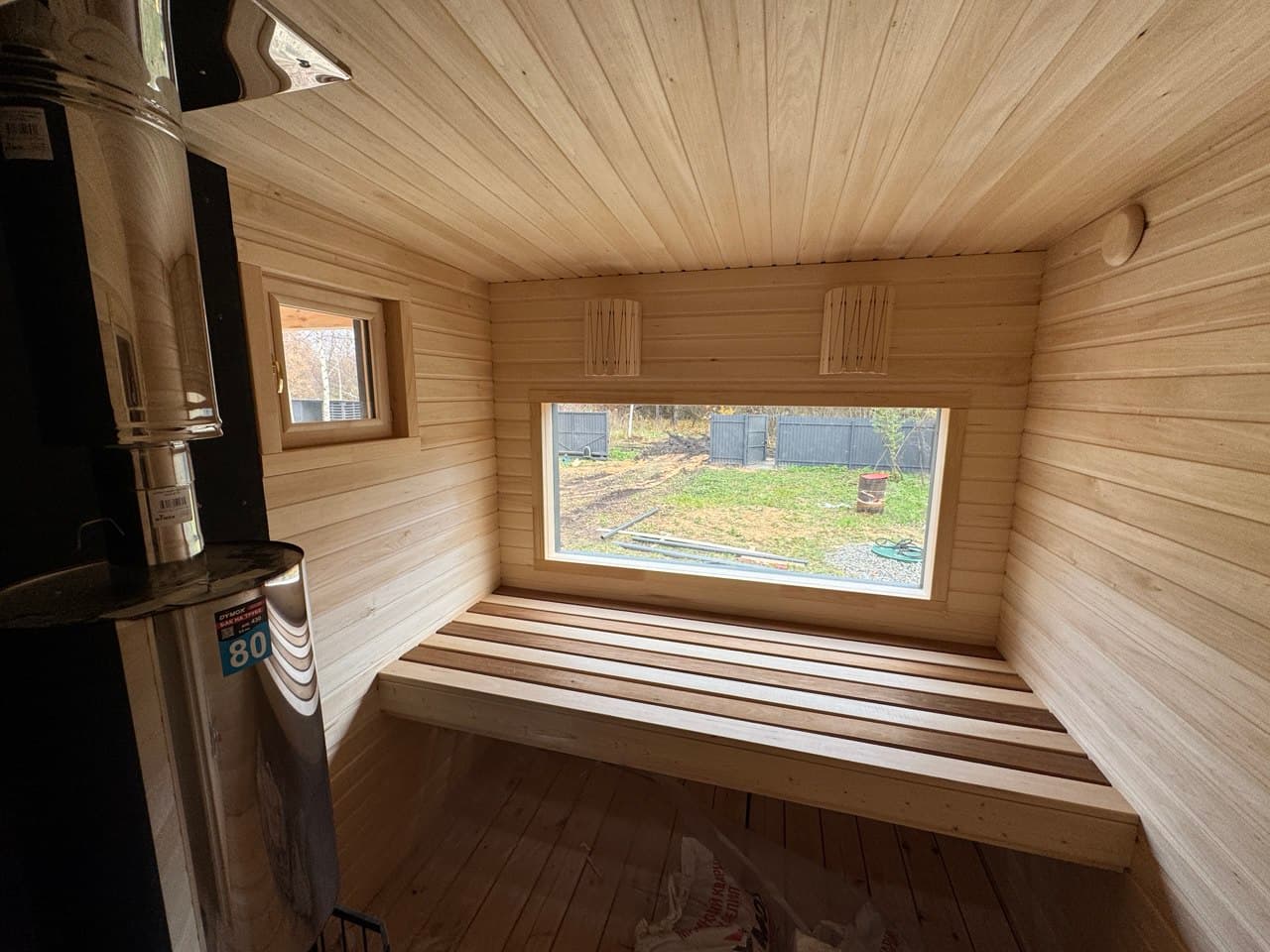
Choose the heater and sauna as one designed system. Follow the selected manufacturer's instructions and use competent installers; room volume or a photograph alone cannot establish a safe installation.
Start with the operating routine
For a private garden sauna, decide who starts the heater, prepares the room and cleans afterwards. For accommodation used by guests, also decide who supervises operation, checks the room between bookings and explains the controls. A familiar routine for an owner may be confusing to a first-time visitor.
Electric heating can suit a routine built around straightforward controls, provided the electrical installation supports the selected equipment. Wood heating adds fuel handling, firing and ash removal, and requires a suitable flue system. Neither option removes the need for supervision and the equipment's safety procedures.
Compare the complete installation
Compare complete installation packages, including the heater and everything needed to operate it. The electrical route, protective measures and available capacity need assessment by a qualified professional. A wood-burning installation requires coordinated combustion-air, flue and fire-safety arrangements.
The table is a project checklist, not a claim that one type is universally better. An attractive stove may be unsuitable for a particular room or a plot where its supporting systems cannot be arranged correctly.
| Question | Electric heater | Wood-burning stove |
|---|---|---|
| Available services | Verify the required electrical supply and capacity | Verify the flue route and combustion-air arrangement |
| Before each session | Follow control and pre-use checks | Prepare suitable fuel and follow firing instructions |
| After use | Clean and dry according to instructions | Allow safe cooling, manage ash and dry the room |
| Ongoing care | Equipment, controls, stones and electrical checks as specified | Stove, stones, flue and fire-safety maintenance as specified |
Select output for the actual room
Manufacturers size heaters using the sauna volume and the room's construction, including surfaces such as glass that change heating requirements. The area printed in a building catalogue may include a relaxation room or terrace and is not the sauna-room volume.
Measure the actual sauna room and identify the glazing and other relevant surfaces. Use the chosen model's guidance, with the supplier or designer, to confirm suitability. Do not treat a simple watts-per-area rule as a universal specification or assume that a much larger heater is automatically more comfortable.
Coordinate benches, clearances and ventilation
Heater location affects bench positions, movement and contact with hot surfaces. The model's required clearances, protective provisions and installation details must be respected. A guard is not permission to reduce the manufacturer's clearances.
Ventilation and temperature-sensor placement also depend on the equipment and ventilation method. An inlet placed without considering the sensor can interfere with control. Ask for a coordinated layout showing these relationships, rather than separate drawings from teams that have not checked one another's work.
Require a demonstration, not just the keys
At handover, ask the installer to demonstrate the permitted start-up procedure, normal controls, shutdown and drying routine. Keep the exact model's instructions and identify who handles service. Any remote-control feature needs its own manufacturer-approved safety provisions; it should not be improvised.
With CHEBWOOD, discuss the sauna room, relaxation area and intended use before fixing the heater choice. The written specification should identify the selected equipment and the installation responsibilities. Confirm the external work separately where it is outside the building supply.
Checklist
- Private or guest use is clearly stated.
- The actual sauna-room volume and relevant surfaces are known.
- Electrical or flue requirements have a responsible installer.
- The equipment, benches, ventilation and sensors are coordinated.
- The exact model's installation and operating instructions are available.
- Cleaning, drying and periodic maintenance responsibilities are agreed.
Frequently asked questions
Which heater is cheaper to operate?
That depends on the equipment, session length, use, local energy or fuel costs and maintenance. Compare a stated operating scenario rather than an unsupported universal claim.
Can I replace an electric heater with a wood stove later?
Do not assume a direct swap. The flue, combustion air, clearances and other provisions need a new assessment for the chosen stove.
Is a larger heater always better?
No. The heater must suit the room and the manufacturer's permitted conditions. Selection should account for volume, construction and controls.
A practical guide from a manufacturer. Qualified local professionals should confirm the technical and legal requirements for your particular plot and building.
Turn your plans into a project
Send us your plot location, intended use and preferred floor area. We can discuss the layout, specification and next steps.